北京语言大学中美国际健康学院(英文:Sino-American International College of Health, BLCU-NSU)
🌍 外方院校:中美国际健康学院
🌍 中美国际健康学院
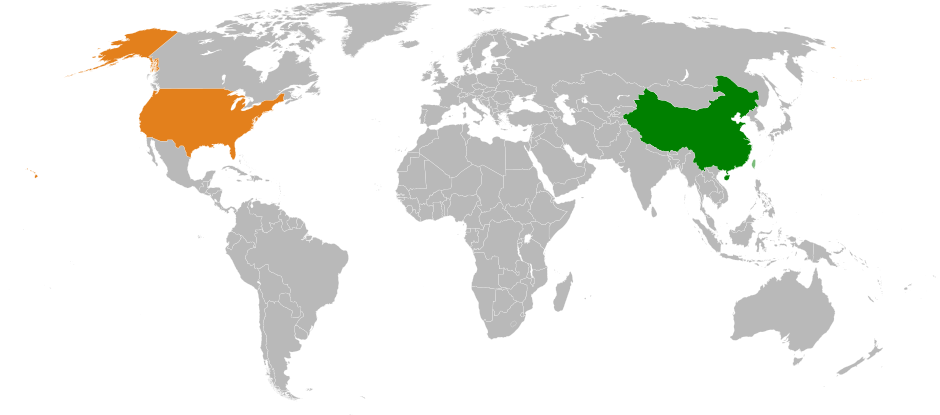
The relationship between the People's Republic of China (PRC) and the United States (US) has been complex and at times tense since the establishment of the PRC on 1 October 1949 and subsequent retreat of the government of the Republic of China to Taiwan. After the normalization of relations in the 1970s, the US–China relationship has been marked by persistent disputes including China's economic policies, the political status of Taiwan and territorial disputes in the South China Sea. Despite these tensions, the two nations have significant economic ties and are deeply interconnected, while also engaging in strategic competition on the global stage. As of 2025, the US and China are the world's largest and second-largest economies by nominal GDP. Collectively, they account for 44.2% of the global nominal GDP. The proclamation of the PRC in Beijing by the Chinese Communist Party (CCP) chairman Mao Zedong created a new central government on the mainland in October 1949. Relations between the US and the new Chinese government quickly soured, culminating in direct conflict during the Korean War. The US-led United Nations intervention was met with Chinese military involvement, as China sent millions of soldiers to prevent a US-aligned presence on its border. For decades, the US did not formally recognize the PRC, instead maintaining diplomatic relations with the Republic of China (ROC) based in Taiwan, and as such blocked the PRC's entry into the United Nations. However, shifting geo